Business

Nasarawa catfish farmers record boom

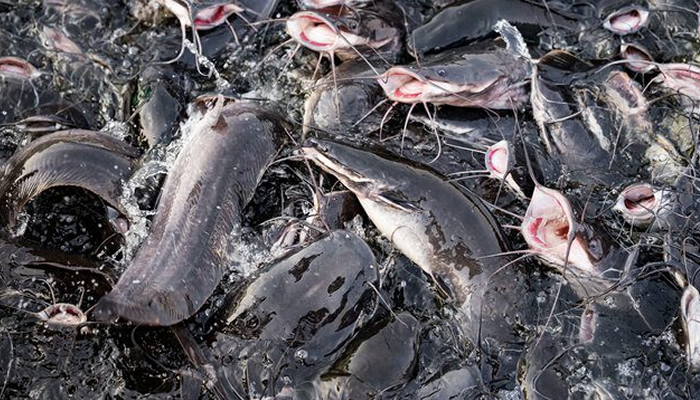
Some catfish farmers and sellers in Nasarawa State have expressed satisfaction following the high patronage in their business. The farmers stated this in separate interviews with the News Agency of Nigeria on Wednesday in Karu Local Government Area of Nasarawa State. NAN reports that research shows that catfish farming in Nigeria is experiencing high patronage, indicating a thriving market for the product. The research also shows that this popularity is driven by several factors, including catfish’s status as a readily available and affordable protein source for many Nigerians, particularly those in the lower-income households. NAN also reports that the national fish demand, estimated at 3.6 million metric tonnes annually, surpasses domestic production, further fuelling the catfish farming sector. Mr Uduak Solomon, a popular farmer in the Angwan Tiv community in New Nyanya, said he started the business in 2016 as his major occupation after he retired as a security officer. Solomon added that over the years, his business had flourished beyond his expectations in spite of the numerous risks that were involved in fish farming. He said that he made huge profits in the last three months in his business due to the Sallah and Easter celebrations. Solomon said that the reduction in the cost of fish feed was also a major factor that helped boost his profit. According to him, in 2024, a bag of Blue Crown fish feed was sold for N29,500 by now it goes for N26,200. “The price for a kilo of catfish currently ranges from N2,800 to N3,500, but last year it was sold for N4,800 per kilo. “With the reduction in price, patronage had increased tremendously,” he said. Solomon advised farmers to sell their catfish according to the current market price, as some farmers tend to keep their fish for long with the hope of selling at a higher price. Mrs Margret Audu, a fish seller, said she had made tremendous sales in the catfish business this year. She said with the high demand for catfish from various restaurants and eateries, she had witnessed an increased patronage. Audu stated that in spite of the high demand for fresh catfish, there was also a significant demand for dried catfish, as many people preferred as it was easier to preserve. She, however, stated that the major challenge she encountered was the high cost of transportation to different farms in search of catfish. Audu appealed to the Federal Government and non-governmental organisations to support small-scale business owners with grants and equipment to boost their businesses. Mr Bala Suleiman, another fish farmer, shared his remarkable 12-year journey in the fish business with NAN. He recounted the challenges he faced in his first year, including limited funding, high mortality rates, expensive feed, low demand and theft. Suleiman explained that he surmounted his challenges through loans and grants from cooperative societies, coupled with his determination in ensuring that his business succeeded. He advised farmers to engage in regular sorting and changing of water as a means to minimise the mortality rate to ensure a good harvest. MS Elizabeth Aonodongu, a fish seller, described the catfish business as lucrative, adding that it had enabled her to support her family’s needs over the years. She attributed the popularity of catfish to its high protein content, saying that many people preferred it to other fish, making it a much sought-after product in her community. Aonodongu said that in the last three months, her farm sold over 6,000,000 catfish, both smoked and fresh, to various bars across different communities, with many being exported abroad. Aonodongu added that sales at the beginning of the year were underwhelming due to the high cost of hatching materials. Aonodongu also expressed the frustration that some customers buy on credit, with promises to pay at month-ends, which negatively impacts her business. In spite of these challenges, Aonodongu advised young catfish farmers to remain consistent and view the prevailing seemingly formidable obstacles as budding opportunities for growth. Source: Punch

Nasarawa catfish farmers record boom Read More »
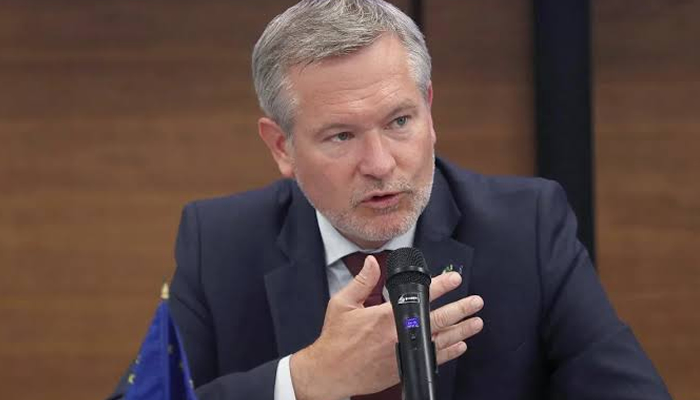
EU to ramp up investment in Kano, says ambassador

The European Union Ambassador to Nigeria and ECOWAS, Gautier Mignot, on Tuesday commended the great investment and entrepreneurship potential of Kano across many sectors like agriculture, renewable energy, innovation and digitalisation, as well as health and education. These are all priority sectors under the EU Global Gateway Strategy, where the EU joins forces with its individual Member States, European Investment Bank , other EU Development Finance Institutions and the private sector to boost investment critical to the social and economic development of EU partner countries like Nigeria. “In Kano, there is already a notable history to this partnership, with renewable energy investments in secondary schools and primary health facilities, support to smallholder farmers and to manufacturers in the leather and garment sector, or even digital innovation. “Going ahead, the outlook is equally promising, with partnerships in energy, digital, and agricultural sectors, one that would create jobs and opportunities, especially for young people and women in the state,” he said. During a courtesy visit to the Governor of Kano State, Abba Yusuf, in the company of implementing partners like Deutsche Gesellschaft für Internationale Zusammenarbeit, United Nations Industrial Development Organisation and others, Mignot said, “We have an agenda focusing on the green and digital economy, to see how we can partner and increase our presence in the Northwest and Northeast of the country, and to address specific challenges in the region. “Kano State is really a development platform not only for the Northwest but the Sahel region. We see great potential and many opportunities in Kano State. So, we want to partner in trade and investment. “This is in line with our Global Gateway Strategy, working with our Member States, that is, Team Europe, and the European Investment Bank. We also try to mobilise a full range of our funding instruments like grants, loans, guarantees, and others. We want to partner in line with the country’s priorities at federal and state governments.” Revealing further the importance of the delegation’s visit, he said, “We try to leverage more investments and work more closely with the private sector to accelerate investments, with the end purpose to create more jobs and opportunities for young people and women. “During our visit, we want to review past projects to see how they are doing several years after their commissioning. We are also reviewing ongoing projects in the digital sector. We want to launch new projects. It is also very important to hear the vision, ideas, suggestions, and needs of the state from the Governor.” In his remarks, Governor Yusuf stated that Kano, being the most populated state and centre of commerce in the country, is ready to collaborate on sustainable development projects. He appreciated the EU for choosing the state for a broader celebration of Europe Month through a lecture and meetings with stakeholders. He said, “Kano is happy to receive the EU Delegation. Congratulations to the EU on the celebration of the Europe Day on May 9. We also want to thank the EU for choosing Kano for a broader celebration through lectures, meetings with business communities, government officials, stakeholders and experts on sectors such as energy, agriculture, rural development, investment, digital economy, and others. “Kano, being the most populated state in Nigeria and the centre of commerce, we need more cooperation and collaboration with the EU. We are particularly keen to engage in discussions and potential for further collaboration. We recognise the efforts of the EU in bringing many developments to the state. We, however, appeal for more. “We are grateful for the EU contribution, but Kano State needs more. We believe that with your interaction with key stakeholders in the state, we can have a common ground of mutual cooperation and understanding. “More is equally done by Kano itself. We broadened the knowledge of our students by sponsoring 1,100 scholarships abroad. Out of 1,100 students, 680 have returned so far as first-class graduates to give back to the state. Out of 680, many graduated from medicine, pharmacy and engineering. The state government gave them automatic employment in the state.” The governor also referred to the recent ‘Study Fair’ organised by the EU in Kano, providing similar scholarships for students across Nigeria funded by the EU. “Therefore, on the issue of scholarship, I want to assure you that we will also come to you, so that we can get more admissions for our students in Europe,” he added. Source: Punch

EU to ramp up investment in Kano, says ambassador Read More »

Mokwa flood: Fuel scarcity looms in Abuja, Northern Nigeria, as PETROAN, IPMAN react

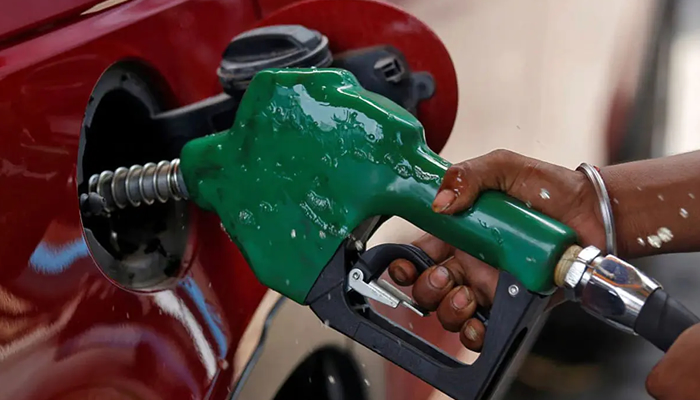
There is looming fuel scarcity as the deadliest flood killed hundreds of persons and brought down the bridge in Mokwa, Niger State, connecting Northern Nigeria with the southwestern part of the country. The bridge that collapsed last Wednesday has disrupted human and vehicular movements around the Mokwa Bridge, with petroleum product trucks not left out. Although the death toll from the Mokwa, Niger, flood remained controversial, the Niger State Emergency Management Agency and the National Emergency Management Agency (NEMA) reported 153, but community members had suggested a higher death toll. Speaking on the effect of the bridge collapse, senior officials at MRS and Nigerian National Petroleum Company Limited filling stations in Abuja hinted that the collapsed Mokwa Bridge may result in petroleum product scarcity during the 2025 Eid al-Adha (Sallah) celebration and holidays slated for June 6th and 9th. An MRS official, who preferred anonymity, told DAILY POST that the development may disrupt distribution. He, however, ensured that the petrol price would remain at N895 per litre during the Sallah break. “Most of the petrol trucks are stranded due to the Mokwa Niger State bridge collapse. “Honestly, I foresee fuel scarcity in Abuja and some parts of Northern Nigeria. “I hope the government fixes the bridge on time, as our trucks had already made a u-turn, which is more expensive and time-consuming,” he told DAILY POST. Another source at NNPCL agreed with the official at MRS, noting that the development may lead to fuel scarcity if adequate supply does not come from other routes such as Port Harcourt and Warri. DAILY POST reports that Dangote Refinery, Nigeria’s only domestic producer of petroleum, is located in Lekki, Lagos State. Mokwa Bridge is the easiest route to Abuja and Northern Nigeria. Reacting to the development, the National President of the Petroleum Products Retail Outlet Owners Association, Billy Gillis-Harry, and the National Secretary of the Independent Petroleum Marketers Association of Nigeria, James Tor, gave DAILY POST a very different perspective. On his part, Gillis-Harry assured that its members would ensure an adequate supply of petrol from alternative sources and routes in Port Harcourt, Rivers, and Delta States to Abuja and across Nigeria. According to him, there would be an adequate petrol supply throughout this year’s Eid al-Adha. “One or two companies’ experiences in Abuja will not bring scarcity of petrol supply in Abuja and Nigeria. “Our members will work with 11 PLC and Matrix to get supply from Port Harcout, Rivers and Delta states. “The only thing is the transportation turnaround time. “Our members will do their best to make sure fuel supply is available across the country during the Sallah. “There should not be scarcity because we have alternatives,” he told DAILY POST. However, Tor said the Mokwa Bridge collapse may lead to fuel supply shortages in Abuja and northern states. He urged the federal government to quickly fix the collapsed bridge or resuscitate an alternative route to avert a possible looming fuel scarcity during the Eid al-Adha. “The federal government needs to be proactive so that the other route is put into use for free vehicular and human movement across the regions. “The Mokwa Bridge collapse will affect the free flow of supply. “This will cause shortages. The unfortunate thing is that Salah is around the corner,” he told DAILY POST. DAILY POST reports that the development comes as NNPCL, Dangote Refinery, and partners recently announced the latest reduction in the price of petrol to between N875 per litre and N910 per litre in Lagos and Abuja. On Monday, the Nigerian government declared Friday, June 6, and Monday, June 9, as public holidays to mark this year’s Eid al-Adha. Source: Daily Post

Mokwa flood: Fuel scarcity looms in Abuja, Northern Nigeria, as PETROAN, IPMAN react Read More »

Ram prices skyrocket in Kano ahead of sallah, causing worries, lower patronage

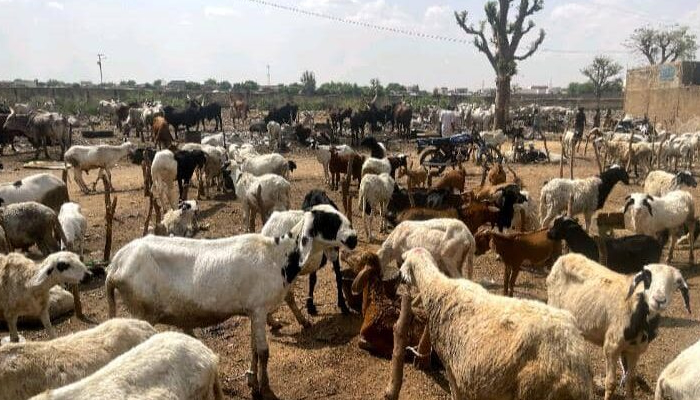
As Sallah draws closer, the prices of rams and other animals for slaughter (layya) have soared in major animal markets across Kano. SolaceBase reports that rams which sold for between N250,000 and N350,000 last year are now going for  N700,000, leading to a sharp decline in buyers. This development has sparked concern among many who say the prices are beyond reach and fear that the number of slaughters this year may decline significantly. In an interview with SolaceBase, the chairman of the Tudun Wada animal market in Nassarawa Local Government, Auwal Muhammad, attributed the price hike to the devaluation of the naira and the increasing cost of animal feed. “A ram that used to sell for N250,000 or N300,000 now sell for N700,000,” he lamented, adding, “The mudu of animal feed, which was N3,000 last year, is now N7,000, doubling the cost and driving prices up.” Muhammad noted that patronage in the market has dropped drastically as Sallah approaches. “As you can see, it’s only us in the market. The buyers vanish when they hear the price,” he said. Another seller, Ahmad Mairago, also linked the steep rise in prices to the high cost of animal feed. He explained that, “If you’re spending N2,500 or N3,000 daily on your ram, by the end of it you’ve spent N300,000. Sometimes you might not make any profit at all after all the expenses.” Mairago urged people to still consider buying rams for slaughtering, emphasizing that it is an act of worship. Meanwhile, Idris Ibrahim, a prospective buyer, said he was shocked when he heard about the new prices. “It’s ridiculous and exorbitant. This year’s slaughtering is only for those who can afford it. But as Muslims, we shouldn’t grumble,” he said. Ibrahim added that even smaller rams, which sold for N60,000 last year, are now going for N110,000. Despite the concerns, Ibrahim encouraged people to look beyond the prices, stressing that the spiritual significance of the sacrifice should not be overlooked. Source: Solace Base

Ram prices skyrocket in Kano ahead of sallah, causing worries, lower patronage Read More »

Northern Nigeria Flour Mills declares 25 kobo dividends, reveals payment criteria and date

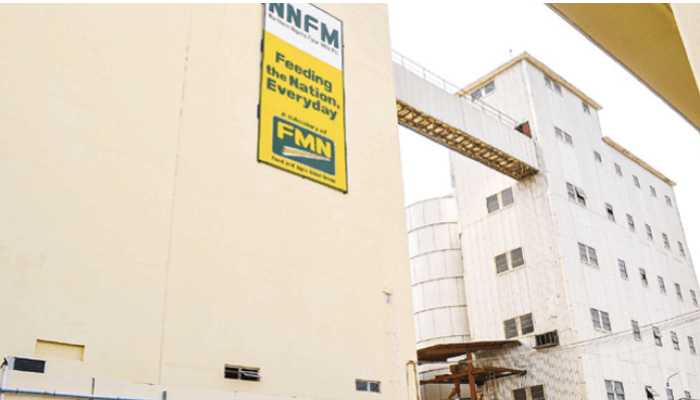
Northern Nigerian Flour Mills Plc has announced a final dividend of 25 kobo for every share of 50 kobo, payable to qualified members. The announcement was made in a corporate action notice filed with the Nigerian Exchange and signed by the company secretary, Ogwuche Theophilus. According to the disclosure, the dividend is for the financial year ended March 31, 2025, and will be paid to shareholders whose names appear in the company’s Register of Members as of the close of business on September 17, 2025. The disclosure stated that the payment date would be 26th September 2025, and that the dividend would be paid electronically to shareholders. Citing e-dividend registration as a requirement, the company disclosed that dividend payments will be made directly into the bank accounts of shareholders who have completed the process. What to know:  Performance:  Northern Nigeria Flour Mills Plc released its audited annual report for the financial year ended 31 March 2025, posting a pre-tax profit of N2.8 billion. This represents a 25.16% increase from the N2.3 billion recorded in the previous year, driven primarily by strong revenue growth. Revenue rose sharply to N35.3 billion, a 36.38% increase compared to N25.9 billion in 2024. On the balance sheet, total assets surged to N30.5 billion—up 70.43% year-on-year. Retained earnings also saw strong growth, rising 56.63% to N4.4 billion. Source: Nairametrics

Northern Nigeria Flour Mills declares 25 kobo dividends, reveals payment criteria and date Read More »